Victoria Morais' Portfolio

Skill Assessment

An auto evaluation service to understand the student's profile and offer the best solution: a preparatory study content, an experience program or a learning path

Visual concept

Overview

My challenge was to study an opportunity to evaluate the proficiency levels of the students and recommend the best service for them (beginning, intermediate or advanced).

Estimated time: 1 month

My role: UX/UI Designer

Discovery

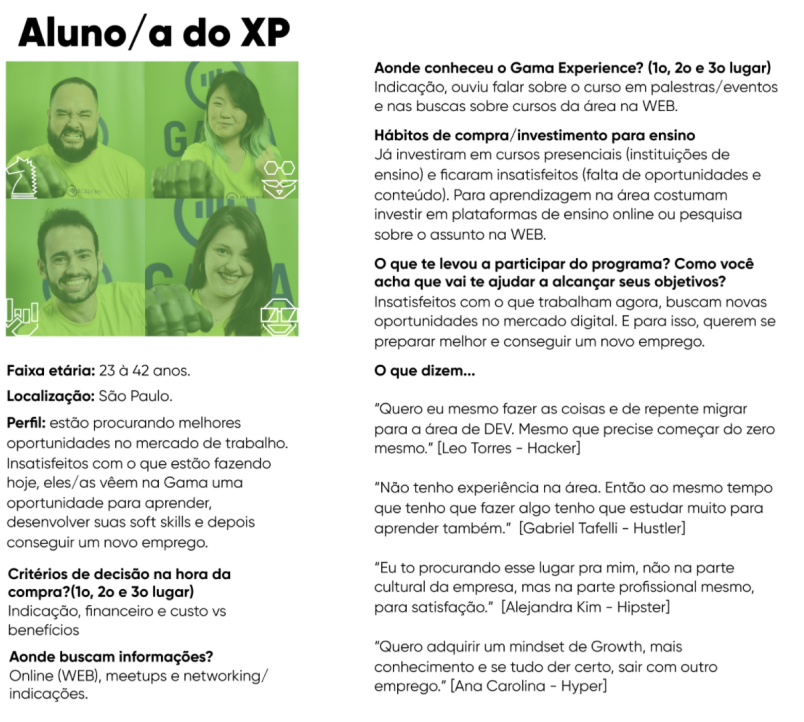
During this phase, my greatest challenge was understanding what kind of product we were presenting to the market and if it attended to the pains and needs of our public. I needed to study and analyze the profile mapping, including their demographic information, behaviors, needs and new opportunities based on the market outside. For this stage, I brought a study made for personas.

Mapping personas.
Analytics

A map of each student's profile was made to identify their pains and needs. What are their motivations? What was interesting about the program? My challenge was to determine whether the business model would meet the public's expectations.

38% of user interviews want to get knowledge for professional growth

28% want to change their jobs

16% were motivated to change jobs after our training program

Most of the students have been motivated to start our courses because of the opportunity to get knowledge and find a new job!

Benchmark: how is the competition?

This is an important stage to identify other players with similar solutions and their own strengths and weaknesses.

Benchmarking analysis.
Strengths

Research component that allows users to research the content they want to learn

Content is separated according to knowledge and all courses available

Weaknesses

The evaluation tool (IQ) is not visible

There were too many steps to find the tool

Validation and ideation

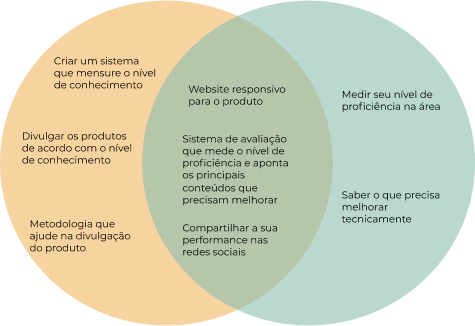
After the data analysis, I had information to use during the creation of a solution. I made an align diagram to identify the value with the business and user needs.

Business requirements
  1. Responsible website;
  2. Timer count for each question (evaluate);
  3. Share on social media platforms such as LinkedIn, WhatsApp, and Instagram;
  4. Website page for marketing share.
Alignment diagram. Participants: Stakeholders, Tech Lead and Product Designer.
Information architecture

At this moment, we created a temporary page on Unbounce to start improvements to the service. Unbounce allowed us to create a fast, independent page without developers, but in contrast, we lost the design brand along the way. A website creation was in progress to develop all the pages and maintain them under the same brand.

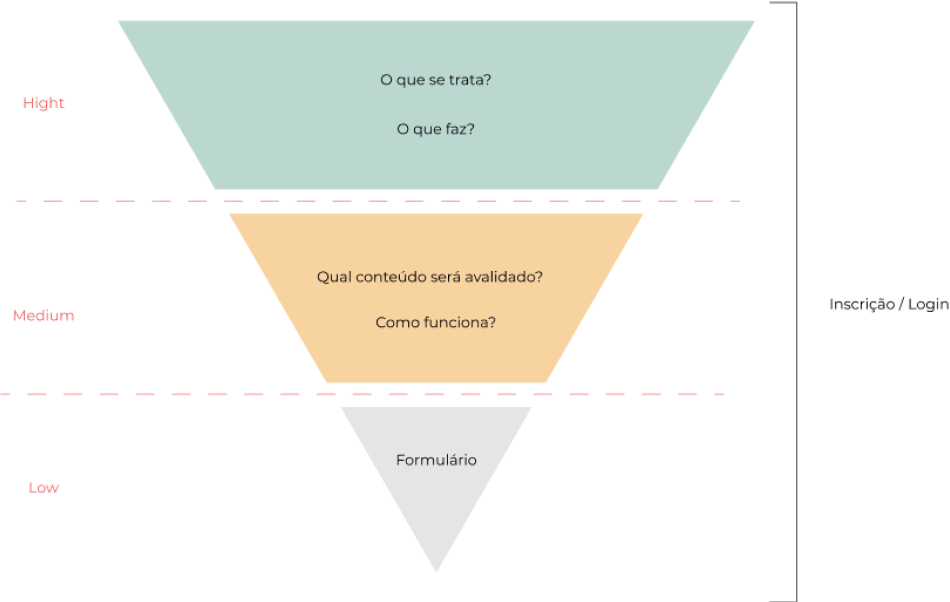
The Gama leveling page was based on answering the following questions:

  1. What is that about?
  2. What can I do on the page?
  3. In which areas of knowledge can I take the test?
  4. How does it work?
  5. How do I login and manage my subscription?
The Inverted pyramid methodology was used to create better communication. Participants: marketing and content teams.
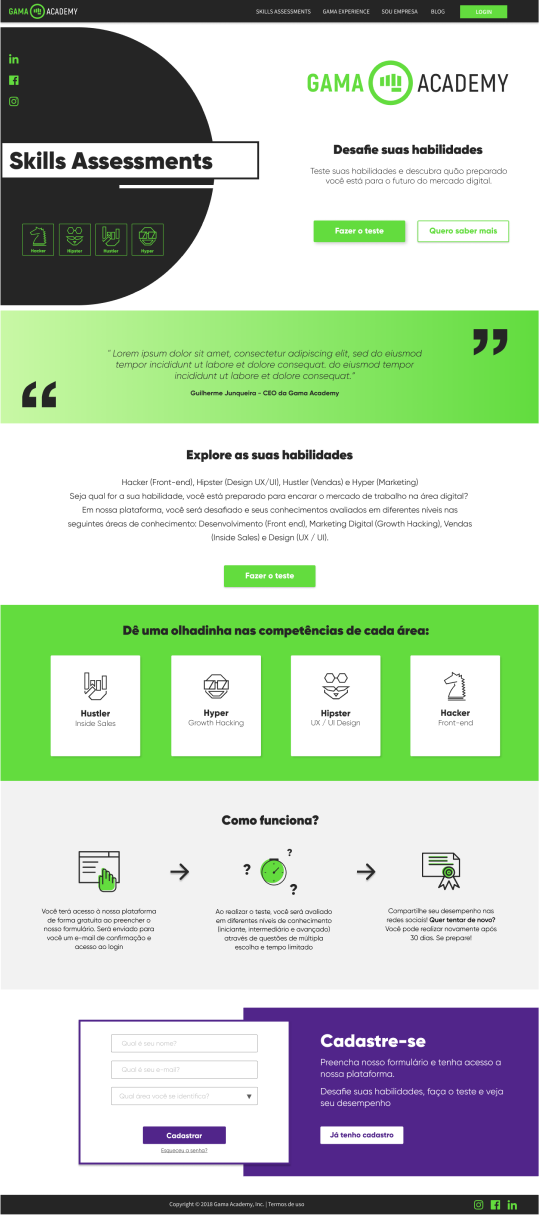
Landing page design

The challenge was to create a page fast and improve the user's interaction with the service. Even if it didn't follow the brand's design patterns, we created an intermediate style guide to follow on Unbouce. The learnings and information collected would help to improve the website (brand project).

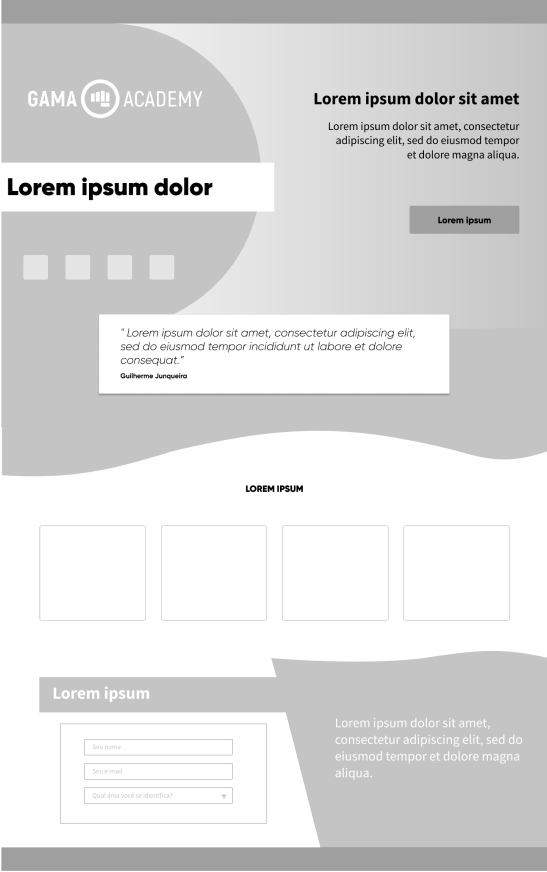
Landing page - mid-fidelity
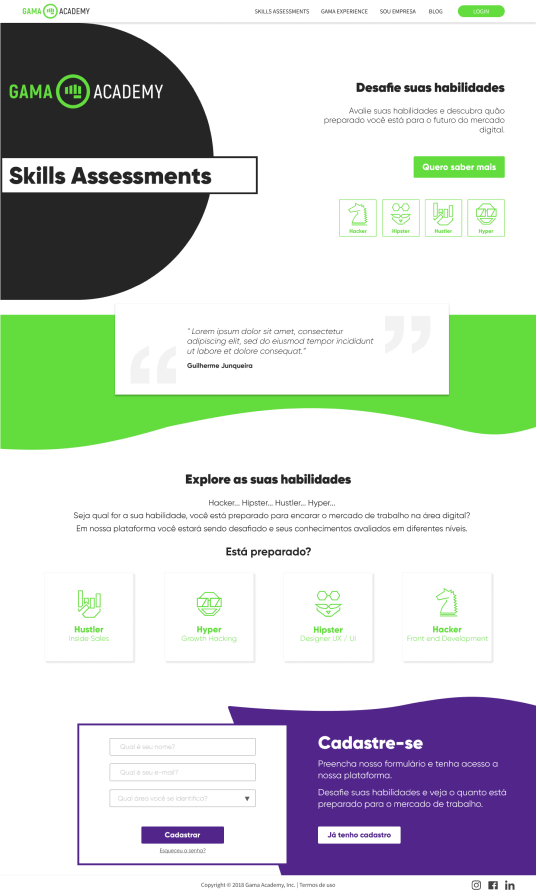
Landing page - high fidelity
Landing page - high fidelity with adjustments
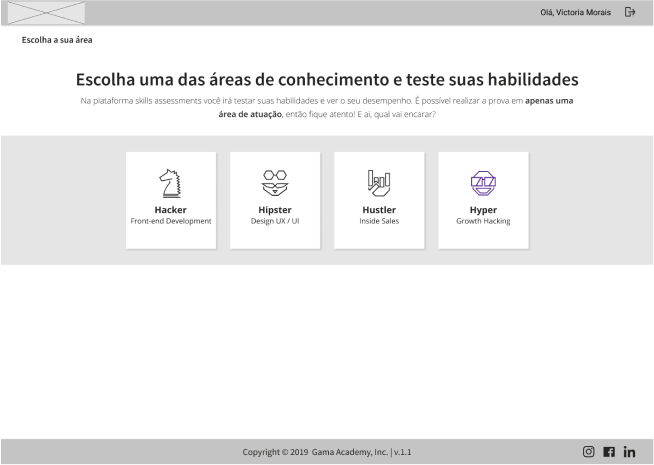
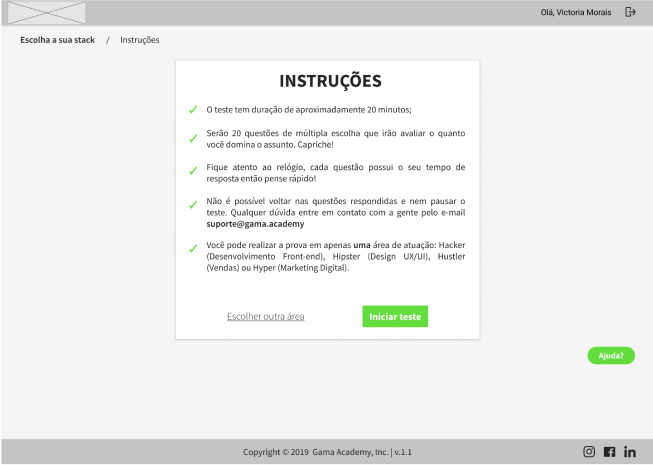
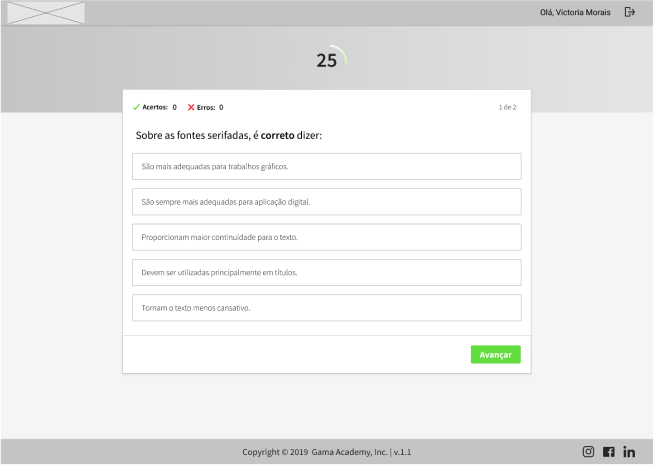
Gama leveling design - mid-fidelity
Stack selection
Instructions
Test
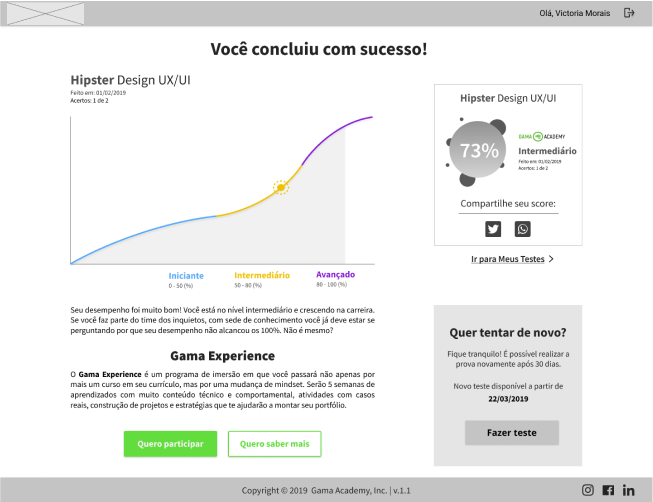
Test results
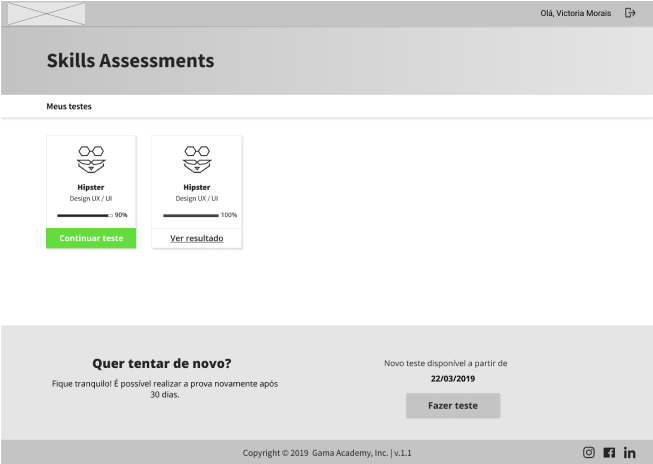
Activity panel
Usability test

It was a remote-moderated test with 5 users. Each participant had 4 tasks to complete:

  1. Finish a test;
  2. Provide feedback on a question;
  3. See the most recent/finished tests;
  4. Try to take another test.
You can see the anotations of the usability test here

Results and learnings

The task success rate was 80%. 4/5 users could complete all the tasks except one, in which case the user's internet wasn't good and made the test difficult to perform. Even if all of them completed the test, most users needed more time to find specific features, like providing feedback for questions, for example.

The timer on each question made users anxious to answer within the time limit

The design of the page wasn’t helping users with long questions (difficult to read)

Users weren't sure if they could retake the test